










I can't say Grange Hill occupies a specially golden place in my memories, but something or other on YouTube led me to it - and suddenly I recalled a character that I found compelling, if somewhat grating: Jessica Samuels, leader of SAG, or School Action Group, militants campaigning for the abolition of school uniforms.
That's her, at the front and in the middle, making trouble and leading rings.

Someone has compiled all her scenes in Grange Hill - but despite being such an ultra-fan spells the character's name wrong - and below you can track the entire storyline.
Jessica seems to pops up out of nowhere as the activist-in-chief of SAG, seething with indignation about the humiliation of kids having to wear uniforms and not being able to express their individuality. Although she pushes for direct action, milder heads in SAG prevail at first and they try going through official channels - meetings of the school council. But they soon realize that they are being fobbed off, deliberately delayed through procedural ruses, and Jessica's confrontational strategy wins through. There's marches and the turning of school blazers inside out. A concession won through direct action over a separate issue (free meal kids getting shunted to a special table of their own in the school canteen) encourages SAG to pile on the pressure. Things escalate very quickly and.... spoiler alert - there's a sit-in in the headmaster's secretary's office, the kids trash the filing cabinets.... Jessica and the other instigators are expelled.

Now I said "compelling, if somewhat grating" because Jessica's expression and tone of voice is an unflagging blend of grievance and insolence. Which is wearing on the ear, even if you agree with her on the issues.
Here she is talking back to the headmaster

I was trying to think what the word for her affect was exactly...
Strident?
Stroppy?

Then it hit me - the word is bolshy.
Not a word you hear very often today. I've always assumed it derives from "bolshevik" but suddenly thought maybe it's like one of those Romany words that then turned into palare.
In the 1970s, as well as being applied to insubordinate kids ("don't you get bolshy with me, young lad") , bolshy was the kind of term thrown at shop stewards and picketing trade unionists. Militants of every stripe.
Presumably it's things like Grunwick and other big industrial disputes of the late '70s that is being nodded to by Phil Redmond with this character and story line. I assume he's on the left, what with his track record of programs with working class characters. And it seems that he got grief from parents and schools administrators for the SAG storyline - concerned that it would inspire copycat actions - which is possibly why it had to end with defeat and expulsion.
And the '70s was also a big period of student militancy, occupations and demos and the like, as captured in Malcolm Bradbury's The History Man, a satire of campus culture itself later made into a TV series (but one I never watched at the time and now regret, having loved the book *. (In an echo of Samuels, I find the ultra-leftist sociology professor Howard Kirk, who you're meant to fear and loathe, to be not only the most charismatic character but someone largely persuasive when it comes to his supposedly crazy-radical ideas)).


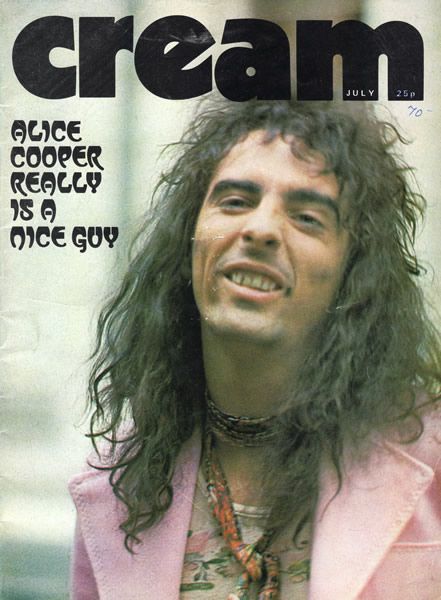
“School’s Out” had unexpected resonance in Britain because its release coincided with the rise of the Pupil Power movement. Encouraged by the militancy of the big unions, whose coordinated strikes in the early Seventies repeatedly brought British industry to a standstill, Schools Action Union formed to protest against the quality of school dinners, corporal punishment, the unnecessary regimentation of school uniforms, and “headmaster dictatorships”. In May 1972 there was a flurry of semi-spontaneous strikes and protests by school kids. One rally, on May 9th, involved sixty children from schools in the Marylebone area of London, then swelled to an 800-strong demonstration at Speaker’s Corner, Hyde Park. There were a handful of arrests for obstruction and insulting behaviour, among them 18-year-old agitator and self-professed Marxist Steve ‘Ginger’ Finch. According to one participant, several of the marchers actually had tickets for Top of the Pops and proceeded to the BBC studio, where they mingled with the audience and gave Alice Cooper the clenched-fist power salute during “School’s Out”.


Pupil Power reached its climax eight days later when a thousand kids marched to Trafalgar Square. According to the Daily Telegraph, scuffles with the police led to 24 arrests. Schoolgirls, some as young as eleven, dressed in their uniforms of short pleated skirts and dingy pullovers, brandished banners demanding “Democracy In Schools” and chanted “We want a riot!”. Others shouted “fight the pigs!” and “seize the time now!”. Then, just like that, the movement fizzled out, as quickly as it had frothed up. When quizzed about Pupil Power by NME, Alice Cooper tentatively endorsed the movement, “so long as it has some kind of constructive purpose”. He added: “I’m not a real revolutionist.... but in all honesty, I believe that school kids should be given a far better deal. I can remember getting kicked outta High School no less than eight times, because my hair was just one inch longer than the school regulations stipulated.”
Schools Action Union - sounds very like School Action Group! I would say that proves it. Jessica Samuels as the Ginger Finch character (in the tree below), just a different gender and a few years younger.


One might also think of the sixth form rebels in If... The contrast between Grange Hill's SAG storyline and If... illustrates differences between the Sixties and the Seventies. The boarding school guerrillas fuse Che Guevara and Sebastian Flyte... the battle is romantic and to the death.... the final images to me clearly indicate that the revolutionaries are surprised by how fiercely the Establishment fights back with such instantly-regimented, instinctively-fascist discipline. They thought revolution would be easy, a lark almost.


But by the late '70s, the background is a comprehensive and the ringleader may have an itch for trouble but she also has demands, a policy agenda.
My shyboy bookworm 1980 version of troublemaking was writing a couple of polemical articles in the school magazine. One had a self-drawn illustration of a schoolboy's head with a microchip being inserted into the brain. This was my first taste of status achieved through the power of the pen - suddenly I was getting nods of respect from fellow pupils who'd never acknowledged my existence until then. One teacher seemed tickled, while wryly noting that I was particularly exercised on the issue of the outdatedness of single-sex education. Less well received was a campaign of graffiti on school desks, invocations for the bourgeoisie to be hung from the lamp posts. My housemaster warned my parents that when I went to up to university, I might fall in with people who would introduce me to drugs.
^^^^^^^^^^^^^^^^^
Now while I was taking this trip down memory lane with Grange Hill - which for its time was a big step forward in realism for kids's TV drama - I saw this thinkpiece in Tribune about former trade union leader and media cult figure Mick Lynch as a bygone social archetype.

The gist is that once, every working class community, every workplace and factory, had a Mick Lynch or several. A ringleader type who ran rings around authority figures and management types, innately entitled with a sense that the world was theirs to run and so unable to deal with someone who refuses their "proper" place in the hierarchy. Fearless, with a sharp brain, able to talk back. The title of the piece is "Making More Mick Lynches" - the question raised is what were the conditions that generated bolshiness and how can they be recreated ?

So Jessica Samuels struck me as the same archetype, or near enough (she seems slightly middle class - her voice has that middleclasslessness non-accent).
And then it turns out they are making more Jessica Samuels... or at least, the character is coming back, as a grown up, in a movie version of Grange Hill that's in the works. And not only that but the film is being directed by the actress who played Jessica in the first place - Sara Sugarman. (I couldn't glean whether Sugarman herself is playing the character again).
Sugarman had a successful career as an actress after her "expulsion" from Grange Hill - she was only in the series for four episodes - and then later on moved into directing movies.
Apparently Jessica Samuels, in the film, has grown up to become a lawyer, and gets involved in some kind of case to do with saving Grange Hill School from closing - something like that.
However I think they've missed a trick here, which is that they should have had Samuels as a prominent Corbynista, high up in Momentum.
I reckon the character, after being expelled, would quite likely - what with Grange Hill being set in the fictional North London borough of Northam - have gone on to be a young apparatchik at the GLC. With her leadership skills she'd have been a good fit for the Red Ken cadre. Which is where many Corbynistas started.

Sara playing a different schoolgirl in what looks like a costume drama.

A resemblance to Thelma aka Brigit Forsyth in Whatever Happened to the Likely Lads


* Ah, I've just noticed that all four episodes of The History Man are on YouTube - something to watch, another way to hide from the present in the conflicts of yesteryear...
And here's a program about the teevee The History Man, actually very interesting, going into the whole process of adaptation of a novel for television.
Hark at Malcolm Bradbury's rotten little teeth stubs
Owen Hatherley at Jacobin on The History Man as televised:
“For all intents and purposes, I am sociology,” he tells one of his students. But to his colleagues, Kirk is a “history man” — someone who identifies historical progress with his own person. Kirk — portrayed with astonishing malevolence and intensity by the great Shakespearean actor Antony Sher…. — is the protagonist of The History Man, a TV series broadcast by the BBC in 1981, based on a novel by Malcolm Bradbury. The program is far better known by now than the novel, with the character embodied forever by the sideburned, mustachioed, coiffed, and glaring Sher, permanently in a tight button-down shirt. The character of Kirk became pejorative in the UK for all the worst things about radical academia, and the series is full of contemporary resonance…. The series became an improbable ratings hit in the early 1980s, not least because of its abundant sex and swearing, its pop art graphics, and its rock and roll soundtrack, along with location work at the high modernist Lancaster University and in the seedier streets of northern England. Yet much about the series can be read as deeply conservative. It participates in the weird idea that sociology itself is a bit of a joke, something the British media later conveniently developed into the notion that media studies was inherently risible. One could easily imagine the show remade today with an equally charismatic and cynical Afropessimist lecturer in critical race theory…..
Kirk, a former working-class scholarship boy, is one of the beneficiaries of the postwar settlement, along with fellow northerners Barbara and Henry; his friends on the show recount how 1968 liberated a once shy, diligent sociologist working on a thesis about Christadelphianism in Wakefield, turning Kirk into a swaggering Marxist churning out books and TV appearances. He thrives in the fictional Watermouth, a compound of the “new universities,” the modernist-bucolic campuses built outside many British cities in the 1960s as an alternative to the old power of Oxbridge and the dowdy Victorian “red brick” universities in the Midlands and the North. It is the very failure of 1968, of the anticipated total change in society, that made Kirk what he is.”
I am surprised Owen thinks the TV show is far more remembered than the book. I thought it was the other way around. And I think I prefer the novel myself, after watching one episode of the teevee show...
It is awfully contemporary what with the chill wind blowing through academia here in the USA...
^^^^^^^^^^^^^^^^^^^^^^^^^^^^^^^^^^^^^^^^^^^^^^^^^^^^^^^^^^^^^^^^^
A more heavy-handed satire of 1970s radicalism - Citizen Smith whose titular character is the leader of the Tooting Popular Front

C.f Private Eye's Dave Spart

Interesting to see the same comedic bathos-trick being tried here as with Citizen Smith - Tooting, Tufnell Park - as if people who live in Zone 3 would not be exactly the sort of constituency up for a total transformation of society, or at least drastically improved public transport and social services.
Where the name comes from

^^^^^^^^^^^^^^^^^^^^^^^^^^^^^^^^^^^^^^^^^^^^^^^^^^^^^^^^^^^^
More on Schools Action Union and the strikes and walk-outs of 1972


We did a class called Bring the Noise last week, for which I asked students to bring an example of, you guessed it, noise - however they wanted to construe it, not the genre noise but anything that irrupts sonic business-as-usual.
One student came up with the goods - an artist called Justice Yeldham (quel nom!) who uses shards of broken glass as a sound-making medium - miking it up and putting it through filters and wotnot.... but the catch being that he blows on it to start the vibrations off... and what with it being serrated, often ends up with a cut lip and blood streaming down his chin and throat.
Talk about suffering for your art!
In the grand tradition of Blixa "my body is a test case" Bargeld
The audience suffers too, sometimes - in this video he mentions one gig where he caused a woman to throw up!
^^^^^^^^^^^^^^^^
Avant-gardists using glass as a sound source has something of a scattered history


When they do essays or presentations, or when we do a class organized around videoclips they've suggested around a theme or genre, my students often turn me onto things I've never heard / heard of.
This is a sporadic blog series representing these oddities and gems.
Occasionally they turn me onto something I do know about but have not heard this particular iteration
So it is with the inaugural offering - a fantastic live version of "Born Under Punches" by Talking Heads (my #3 postpunk band back in the day, after PiL and Slits). It's concert footage but not from either of the live albums / concert movies.
Suddenly I'm not sure whether I ever saw the Jonathan Demme movie... bit remiss if not, for a postpunk historian.
The idea of the concert movie has never really appealed to me, though.
Nor - really - the live album.
Qs for the massive
1. What are the great concert movies?
(Don't bother to say The Last Waltz - it is great, in places, yet also hugely aggravating on account of Robbie Robertson's smugness - and the final bit of The Band's music on a soundstage, with no audience, is some kind of cultural crime, or at least all-time Top 10 case of legacy-self-enshitenment) *
2. What are the live albums worth bothering with?
^^^^^^^^^^^^^^^^
You don't believe me? Gird thy earholes and eyeholes
I am taking refuge from the political-social horrors of the present by paying attention to the political-social woes of yesteryear - YouTube's ancient episodes of World In Action are particularly diverting.
Or how about this one from the late '80s about the Docklands redevelopment scheme and its deleterious effect on local residents? This is an issue I would have been aware of in vague terms at the time, but not with this concrete detail and vivid grimness. And I would not have seen this program then partly because I didn't own a telly or have ready access to one, but mostly because I was out and about seeing bands or just being young.
An earlier program on the decline of the Docklands, from 1976
This is the opposite of how nostalgia usually works. Generally, nostalgia involves fixating on the "fun" bits of the past, like music or other forms of entertainment, fashion, maybe sport, or just something quirkily of its time - and screening out the shite: urban blight, political strife, racism-sexisim-homophobia, mass poverty and the sheer impoverishment of the look of things in run-down post-WW2 Britain.... The backdrop, the context, drops away, and just the redeeming or charming or daft bits are focused on: the escapism rather than the things that necessitated escape. Which then creates a completely distorted, unfaithful sense of how fun and cool the past was.
But what I'm doing is finding distraction and even relaxation in the bad bits of the living-memory past. It's not even warts-and-all retrospection - I'm zooming in on the warts and nothing but the warts.
But there is also lighter fare on offer - via the bonanza that the BBC Archive has recently been offering up, here's a 1977 program on the brewing industry in U.K. and the Campaign for Real Ale.
Fascinating stuff, from the space-age control room of the gigantic industrialized brewing works to the struggle for control of the drinking map of the country between the different cartels of beer makers (whose tentacles also extended into spirits and wine, many well known brands) and then finally to the earnest activists of the pressure group CAMRA, with their conferences and drably written and drearily delivered speeches, not to mention their clothes (lots of sweaters and sideburns). Surprisingly there are actually some women visible at the meetings, if not on the podium.


I feel like this information came up in some recent blog comment, or perhaps I just saw it on someone else's blog - but CAMRA put out a record. A selection of beer themed tunes, performed for some reason in a lite jazz-rock mode, as performed by the National Youth Jazz Orchestra. One of the tunes is by the great Neil Ardley.


To be honest, even if I didn't direly crave relief from the present, I'd probably happily spend all my TV-time watching these old currents-affairs programs and investigative reports from the 1970s and 1980s. Joy's patience for it, though, is limited.
Then there's the light entertainment fare of the time, astonishingly bereft and often outrageously reactionary.
But that's a whole other story - indeed there's a blog post I have been hatching for a while now, working title New Faeces.
^^^^^^^^^^^^^^^^^
Suddenly occurred to me this blog has basically become a 1970s blog - or 70s / 80s blog (if factoring in the Bad Music Era postige).
Bit like a cross between those decades blogs of yore and Found Objects....
Pin-up of the thickly thatched Jimmy Pursey, at a female reader's request, duly answered by the equal-opportunity musical newspaper S...


