When I was first rediscovering postpunk and feeling inklings of a book-to-come, back at the start of the 2000s, I came across this really intriguing piece on Scritti Politti and The Desperate Bicycles. Written by a bloke called Richard Mason, whose name rang a vague bell, and published at Jason Gross's webzine Perfect Sound Forever.
What particularly snagged my fascination was a single sentence in a paragraph about discernible pre-punk influences on the early Scritti sound:
... the guitar on both "Skank bloc bologna" and "Is and ought the Western world" reeks of Martin Carthy's electric playing on the early Steeleye Span records.
This blew my mind - I had no idea that folk-rock and traditional English music was part of Green & Co's DNA.
So I went out in search of Steeleye Span, buying a bunch of their 1970s LPs (going pretty cheap - the records had been widely available major label releases in America) before finding one that had Martin Carthy on it: Please To See The King. And sure enough, on the very first track "The Blacksmith", the timbre and tonality of Carthy's guitar (playing electric rather than his usual acoustic, but playing in a totally non-rock way) is uncannily close to Green's up-spiralling runs on "Skank Bloc Bologna".
"The Blacksmith" became a favorite song, as much for Maddy Prior's plangent vocal and the heart-breaking tale of true love betrayed, as for McCarthy's crystal contributions. I would play it often around the kids as they grew up, vaguely hoping that its immemorial sorrow might harrow their little hearts and reawaken some kind of latent dormant Englishness. Alas, no...
Then researching Rip It Up and also interviewing Green for the Early compilation in 2005, I pieced together the story of Gartside the young folkie.... He told me about how prior to punk he had learned to play a few jigs and reels and Morris dances on guitar... Elsewhere he has described himself as a Martin Carthy stalker - going to gig after gig, trying to discover the secret of the guitarist's unusual tunings. In this Peter Paphides interview with Green, there's a story about Carthy kindly going "out of his way, on occasion, to drive his teenage fan home." Legend has it that Green used to do Morris dancing and still had bells on his ankles when he went to see the Sex Pistols in Leeds on that fateful Anarchy Tour night - the Damascene moment that led to the formation of the group known first as The Against (how punky!) and then, swiftly renamed, Scritti Politti.

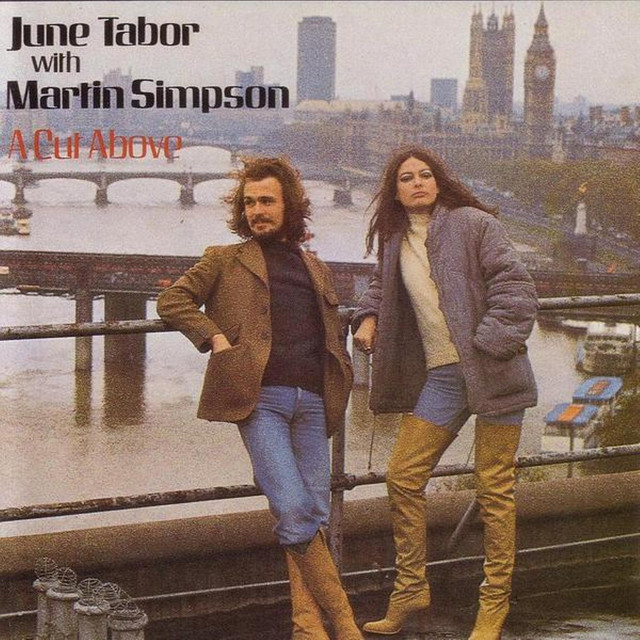
Morris Dance supergroup led by ex-Steeleye Ashley Hutchings.
New York Times 2023 article on a hipsterized revival of Morris Dancing!
Clearly the enthusiasm for the music and the years of listening to it, along with all the Canterbury scene stuff, infused Scritti's sound. For instance, I noticed that a track on the Peel Sessions EP, "Scritlocks Doors" is very close melodically to "Lucy Wan", a traditional ballad Carthy reinterpreted on Byker's Hill.
But while he talks about it happily now, during the postpunk era and on into the New Pop phase, Green never mentioned the folk thing in interviews.
I guess folk rock would have been completely unfashionable then. Indeed, it would never have occurred to me, someone getting into music from about '78 onwards, to check out Fairport Convention or anything of that ilk. "Folk" - you would just picture beards and whittling and real ale and a finger in one ear. Bands with names like Hedgehog Pie.
Yet clearly it had been a thinking young person's, a serious young person's, option in the first half of the 70s. All kinds of people-you-wouldn't-suspect had a folk past - Squeeze, Robin Scott (as in McLaren's friend and the guy behind M / "Pop Muzik"). Having once been into traditional music wouldn't seem to sit well with Green's Eighties ideas about music, but in terms of an intellectual / political evolution, it actually makes sense: start with a somewhat crude Communist cluster of associations and equations ("the people's music" / protest / authenticity / anti-commercialism), then go into the more complicated Gramscian Marxism phase of demystification, and then from that into the confounding convolutions and undoings of deconstruction.
But yes, hat tip to the writer who alerted me to this unexpected connection: Richard Mason.
Who, it turns out, I must surely have rubbed shoulders with, since his circle overlapped with my circle in Oxford and he was in various bands with people I knew. Don't recall ever speaking but who knows what transpired on those long-ago, cider-laced evenings.
Sadly, I learn also that Mason died recently.
At Perfect Sound Forever, there is a sweet tribute, a gathering of memories from his friends and musical accomplices on the Oxford scene. At the end, there's a listing of and linking to all the pieces RM wrote for PSF, among them articles about John's Children, Captain Beefheart, Neu!, Annette Peacock, and Alternative TV.
Thanks also to RM for the piercing beauty of "The Blacksmith" as enduring presence in my life - who knows if I would ever have come across it otherwise...
"The Blacksmith" has been widely covered - and was in fact done twice by Steeleye Span, with another earlier version on their debut album Hark! The Village Wait, before Martin Carthy joined. Don't like this rendition nearly as much as the Please To See the King version (their second album - I guess they must have agreed, otherwise why revisit the tune so quickly?).
Notable versions
Jah Wobble has one on his 1996 album English Roots Music - not something he'd have been likely to do in the PiL days.
BBC light entertainment regular guest Barbara Dickson was always audibly a folkie - that ringing clarity of tone.
Planxty on their debut album
Shirley Collins's version of "A Blacksmith Courted Me"
On this eerie wavering version, it's credited to Shirley and Dolly Collins - the melody is rather different and some of the lyrics are changed
Lyrics could be reworded into an ode to a Young Communist - "with his Hammer and Sickle in his hand / He looked so clever"